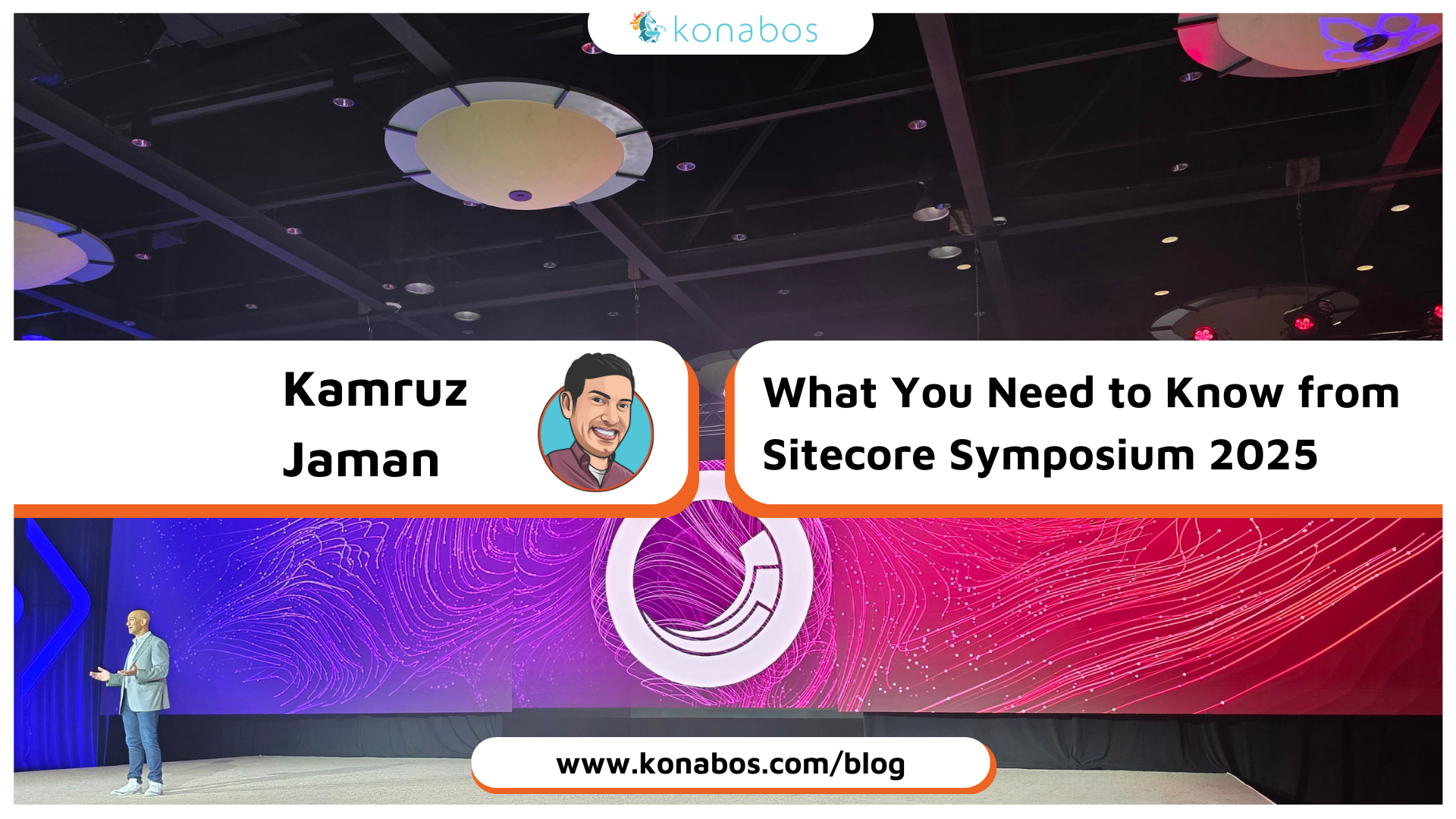
Agentic, Unified, Open: What You Need to Know from Sitecore Symposium 2025
Kamruz Jaman - Solution Architect
28 Nov 2025
That Symposium feeling. And the inevitable blues afterwards.
This year Sitecore Symposium was back in Orlando, at the Swan & Dolphin resort. This was the same resort the event was hosted back in 2018 and 2019, back thankfully this time the entire event was confined to the Dolphin resort only – which saved a few miles of walking between the two buildings! Thankfully this time the weather was great – sunny, hot and not raining!
As always, the atmosphere was buzzing with the community reconnecting, socialising and catching up with friends, putting hand shakes to people you had been speaking virtually for so long and of course the excitement of what new announcements this year brings.
Obviously AI would play a huge part of the announcements, but the question everyone had on their mind is just how. We’ve seen enhancements to XM Cloud over the past couple of years with Generative AI add-ons, through the Stream product, but these were enhancements rather than anything revolutionary. But 2025 may go down as the most pivotal Symposium since the launch of XM Cloud.
After two packed days of keynotes, too many amazing sessions all happening at the same time that I couldn’t attend them all, demos, side conversations, and even our own little recap videos (usually recorded somewhere between coffee runs), here’s my take on the big stuff you should actually care about.
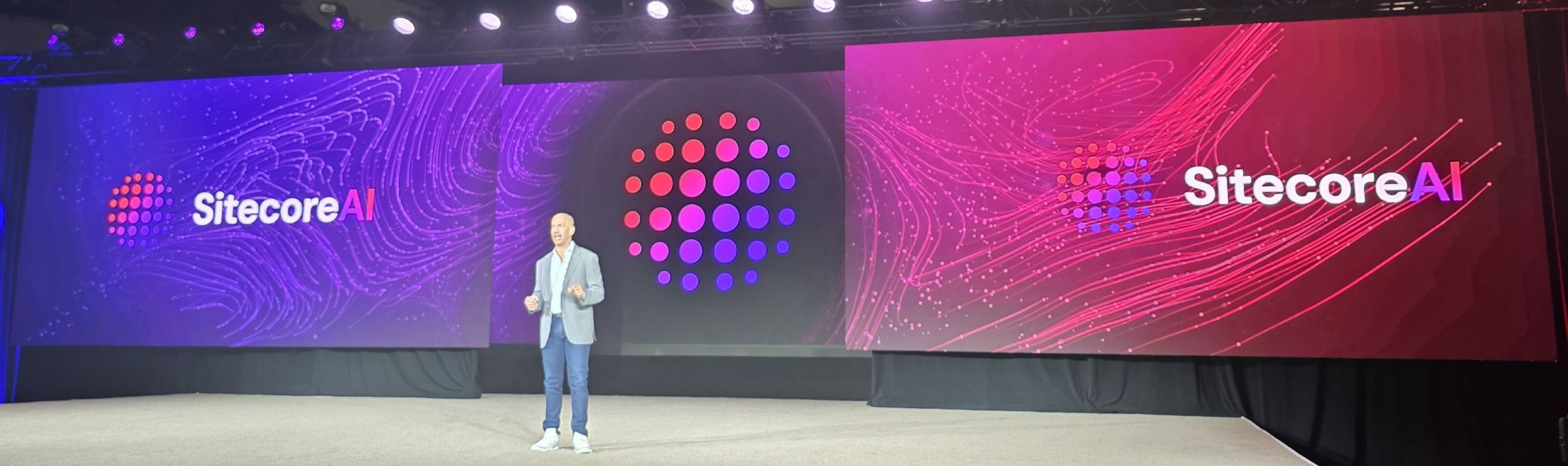
SitecoreAI
The big news is XM Cloud is dead! The future is agentic, the future is SitecoreAI.
Not in the “here’s a little sprinkling of AI as a helper” kind of way. But in the “we rebuilt the entire platform around AI and it is now a foundation in how everything works" kind of way.
They introduced SitecoreAI, which is basically the next-generation evolution of XM Cloud. It unifies content, personalization, data, search, DAM—everything—into one platform that learns as you work. This was a massive undertaking and Sitecore has been busy in the background moving all it’s products on a single platform (Microsoft Azure) which means everything can be more easily connected and AI can be more easily leverage, with everything acting as a single unified platform and built-in intelligence across content, data and personalization.
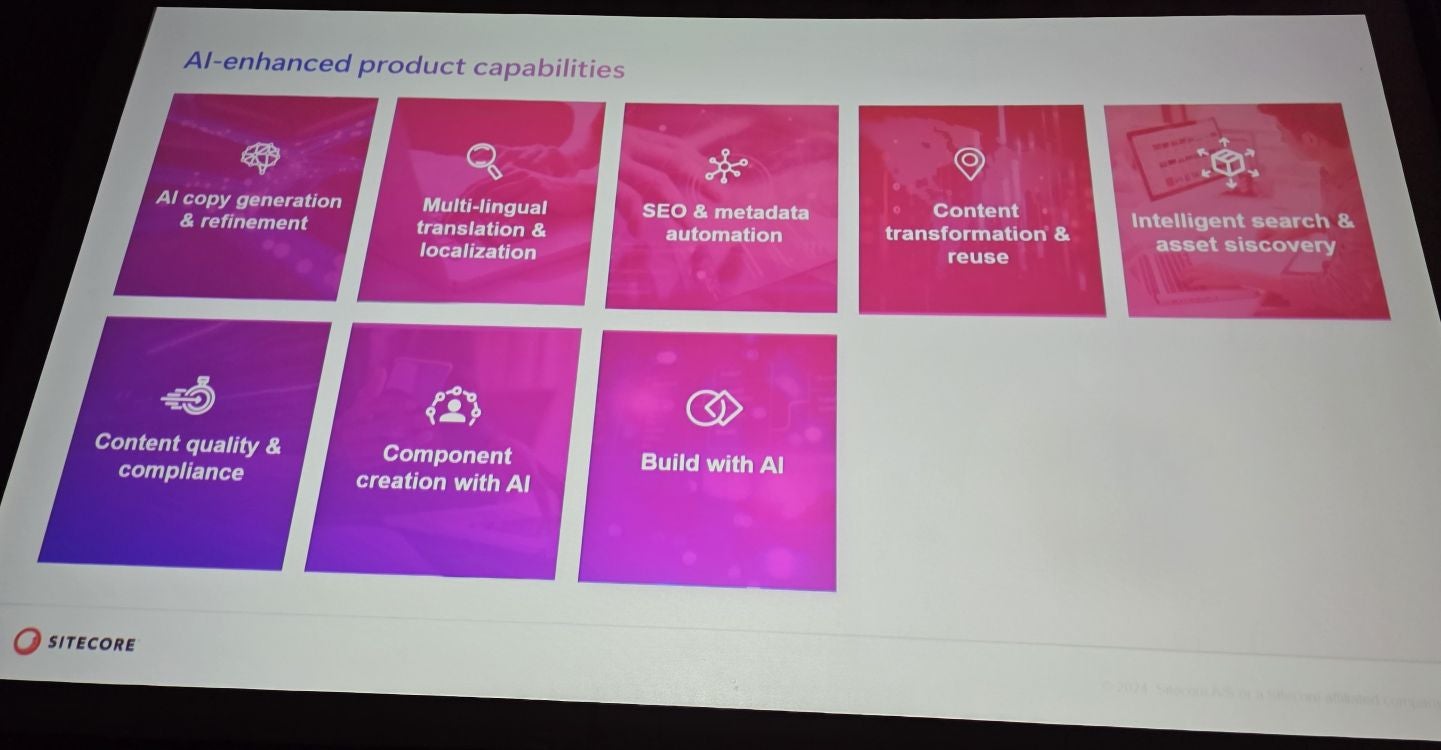
Of course, there is all the usual AI product capabilities you’d expect, such as a content generation, SEO, multilingual translation, brand tone compliance. But we now also have AI contextual assistants built into the experience too, adding proactive in-flow support tailored to what you are working on, and other AI-enhanced product capabilities, such as generative search, auto-tagging and generative insights.
Debut of Agentic Studio
Agentic Studio is the hub where marketers and AI work together. Think of it more as your personal assistants for writing, translating, auditing, planning, migrating, optimising. And if the 20+ ready-made agents don’t do what you need, you can build your own with no-code tools. That’s huge.
We checked out the demo at the Sitecore booth and honestly it looked really polished:
- Single dashboard
- All channels (sites) in one view
- Page Builder, DAM, components all right there
- Works across the whole platform
And none of this felt like AI for the sake of AI. What really stood out in the Agentic Studio was just how seamless everything felt. We’ve all sat through demos where AI features seem bolted on or exist in a completely separate experience, but the Studio brings all your channels, content, components, assets and brand tone into one place, and the AI agents simply slot into the workflow as if they’d always been there. You can brainstorm, generate, rewrite, translate, analyse and even automate multi-step tasks without ever leaving the interface. And the best part? It isn’t trying to replace anyone — it genuinely feels like having a marketing assistant who already knows your brand, the component library, previous campaigns, and all in the context of whatever you’re working on.
Sitecore talked openly about the challenges of chaining multiple AI outputs — how accuracy drops with every hop — and outlined how the future of Agentic Studio is really about AI + human checkpoints, not blind automation. The new workspaces, the upcoming Canvas for whiteboard-like creation, and the tools to build your own agents (or even bring in agents from tools like OpenAI or Copilot) give the whole thing the feel of a collaborative studio rather than a black box. The already released Design Studio, a creative space allowing your team to view, build and test components is really impressive, esp with the native AI capabilities allowing non-developers to update and test new components, using existing components from their library as a starting point. This deserves it’s own post. It really felt less like “AI is taking over your job” and more like “AI is finally doing the admin bits you hate so you can focus on the work you actually want to do.” And if that ends up being true, Agentic Studio might be the part of SitecoreAI people fall in love with the fastest.
Simplicity
There were three words that kept being repeating: Unified. Open. Agentic.
- Unified: one contract, one architecture, no more “15 different Sitecore products” feeling
- Open: plug in your own tools, connect external LLMs and extend freely
- Agentic: AI agents that do things, not just write paragraphs
The simplification of the licensing model is a huge deal. Anyone who has ever had to deal with procurement knows how many hoops you have to jump through. Now there is only a single platform, and everything is “just a feature” ready to be enabled. But even better than that – everyone gets a free base entitlements for everything, including Personalization, CDP, Stream, Search, DAM, all with generous allowances. This will allow you to create POCs, show business value, figure out if that integration will work as you expect, instead of all of this just being a theoretical concept.
This was a surprisingly fresh direction, and it set the tone for the rest of the event.
Sitecore Marketplace
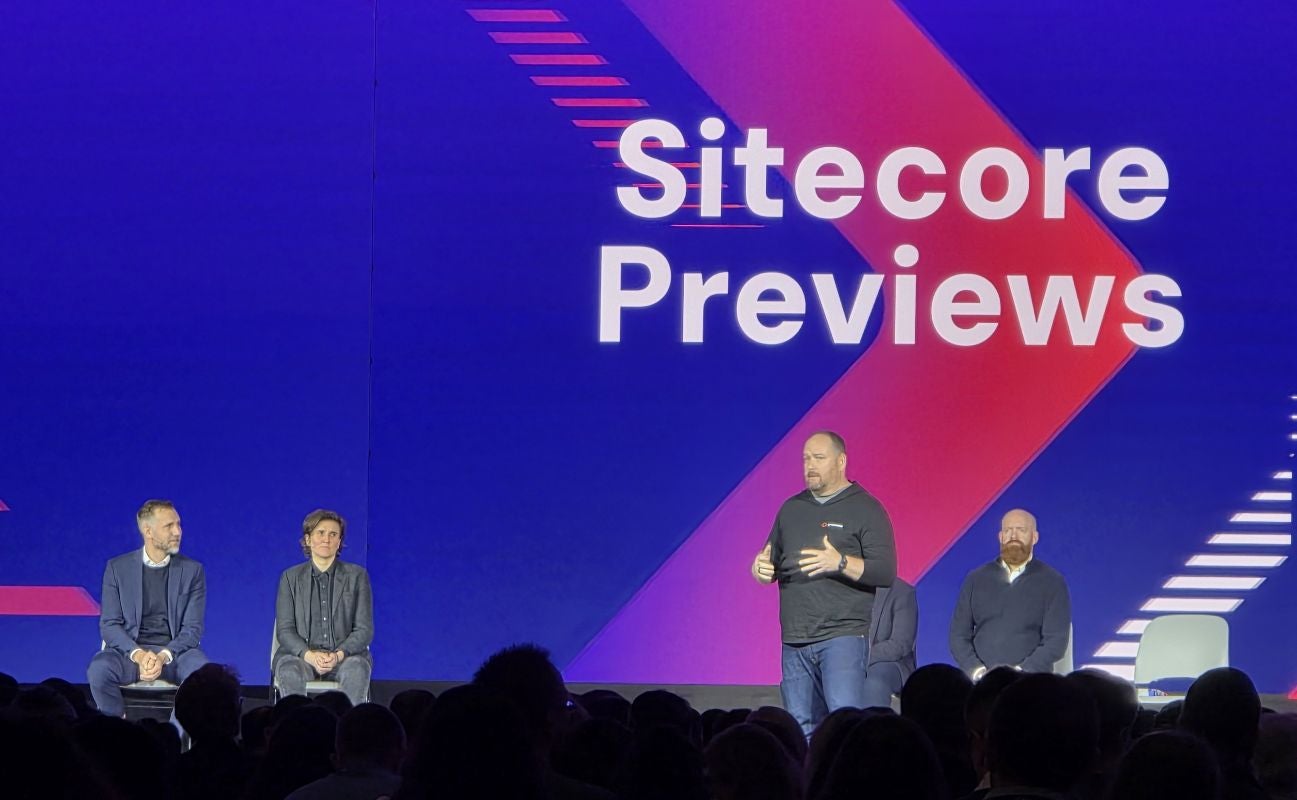
And speaking of extending the platform, the Sitecore Marketplace is back! No, it’s not that old one from many years ago, with outdated modules that were no longer compatible. This is the new Marketplace for the modern age, the way to build Custom SaaS and extend the Cloud platform in a manageable and future-proof way.
The Marketplace will allow partners to build plugins, custom apps, create re-usable connectors, or new field types for example. The apps come in 2 flavours:
- Custom Apps: Private apps built for a specific customer or use case. The owner decides who can use them, making it ideal for your business specific customization.
- Public Apps: Available to all Sitecore customers through the Marketplace.
My colleague Akshay Sura previously wrote about the Marketplace, and even rewrote his SiteCron module for it. You can read more in these articles:
- Unlocking the Sitecore Marketplace: A Deep Dive from SUGCON Europe 2025
- Building Modern Sitecore Marketplace Apps: A Developers Complete Guide
- SiteCron Cloud: Enterprise Scheduling for XM Cloud | Sitecore Marketplace
Product Previews: The Sneak Peeks
We also got a sneak peek into what the Sitecore team is currently working on and products/features that are on the way soon. This was one of my favourite presentations last year and there were some really exciting and very welcome announcements this year too.
SitecoreAI Pathway
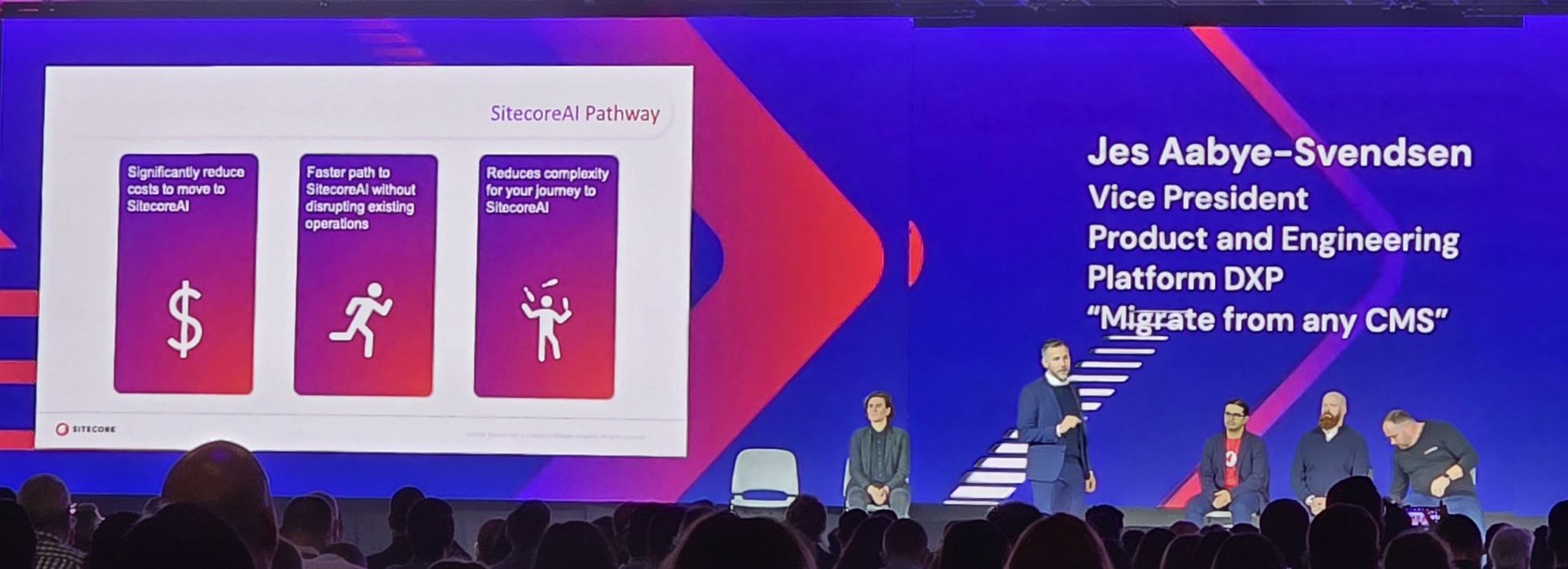
This announcement came out of nowhere, but was a wholesome and welcome one. We’re really looking forward to this, and it will open up a lot of possibilities in the future.
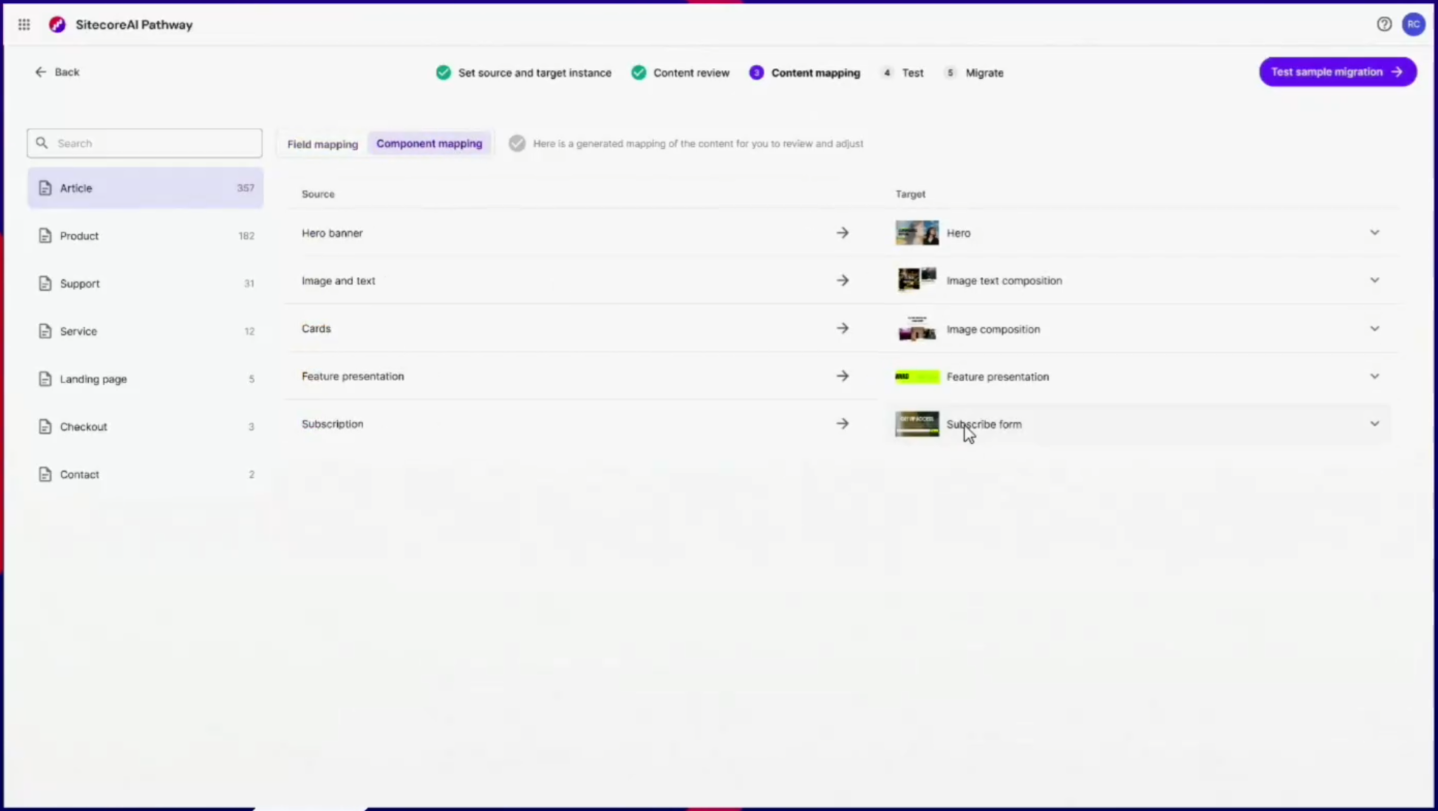
SitecoreAI Pathway is an AI-powered migration solution that dramatically accelerates the process of moving content from older on-prem versions or Sitecore XM/XP or even competitors (such as Adobe, Optimizely or Contentfu) to the new SitecoreAI unified platform.
This AI powered accelerated process can help speed migration by 70%. The tool uses AI to analyze, map, and transfer content and schemas from old systems into the correct formats and structures within SitecoreAI. Unlike the previous XM Cloud Migration tool, which only allowed migration of data and templates as-is, SitecoreAI Pathway allows you to transform data along the way to new formats, allowing a human-in-the-loop step to validate and update anything AI didn’t quite get correct. This AI+Human has been very much an underlying theme of the Sitecore flavour of AI and Agentic. And using AI to move customers into an "AI-first era" of digital experience management only seems fitting.
Enhanced Analytics
A page view tells you when someone showed up, but not what they did when they got there.
Custom events goes deeper, it enables you to capture every meaningful action – every view, click, scrolls, plays and interactions. Component level analytics allows you to see and measure how every element performs, how users move and what truly drives your metrics. But really this is more than just analytics, it's understanding your content and your customers at a new level, and allowing you to truly customise your content based on a deeper understanding of customer behaviour.
Coupled with Site Goals, allowing brands to define what success actually means to them and track those metrics, form fills, engagement and custom behaviours. SitecoreAI can then surface what is working or shine a light on what does not, so you can act with confidence. Personalization just got it’s AI super power! I’m really excited for this, the demo that was shared and the insights we can get from this looks really great and the interface super easy to navigate.
Campaign Releases
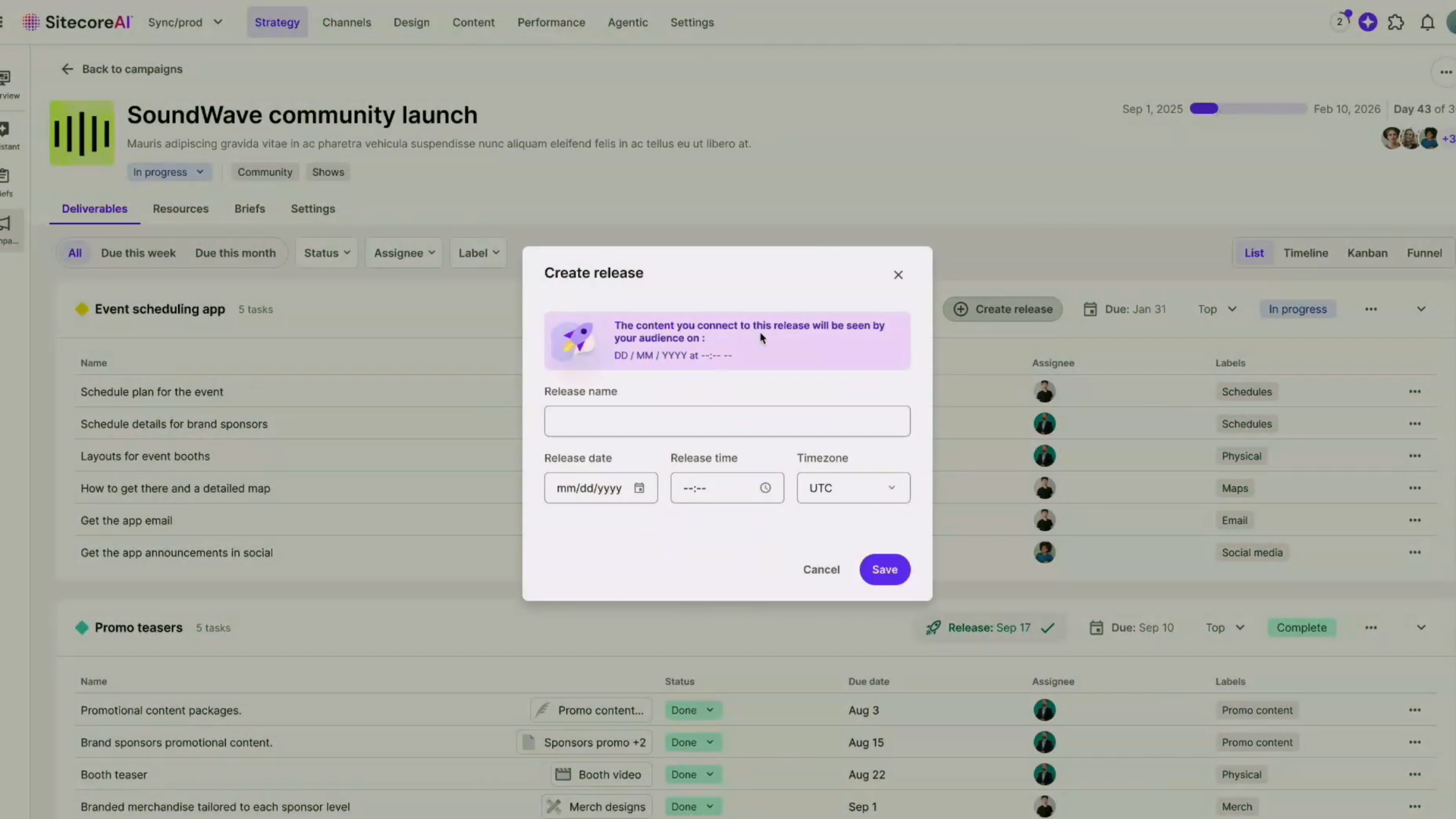
One of the features that really stood out to me was the new Campaign Releases capability, which anyone who has dealt with trying to coordinate and launch a campaign before will know was difficult to coordinate.
Campaign Releases brings everything into one orchestrated space. From the very first campaign brief, you can define tasks, assign owners, track progress, and even factor in offline or external activities. It keeps creative, content, marketing and development teams aligned in a way that feels natural, not forced, and you can see every planned release laid out at a glance instead of trying to piece it together across tools and spreadsheets.
And when you are ready to go live, everything is planned and set to be available from one central management interface. I loved the shift in mindset: publishing is no longer an “act of faith” where you push a button and hope nothing blows up. It’s now an act of precision. When launch day hits, everything goes live to the second, across all channels, with zero lag or propagation delays. And if something changes? You can roll back the entire release in seconds — not item by item, not region by region, but the whole coordinated experience. For anyone who’s lived through a stressful go-live window, this feels like the kind of quality-of-life improvement that will genuinely change how teams operate.
“Packaged Publishing” has been a long awaited feature, but Campaign Releases goes far deeper into the realm of where marketers actually work and live: not just in publishing queues, but in calendars, deadlines and multi-team, multi-channel chaos.
Agentic Studio
No sooner as Agentic Studio dropped, that the upcoming new features are already being developed! AI has been a great leveller and given access to powerful engineering tooling to marketers and content authors. And again, Sitecore is showing us the power of being able to build further on their newly architected, AI-first platform.
Now instead of forcing you into rigid forms or predefined workflows, it gives you this drag-and-drop canvas where you can literally build agents the same way you’d sketch ideas on a whiteboard. You can design an agent visually, or just describe what you want in natural language and let the system scaffold it for you. And because Sitecore is fully embracing openness, you can even use your own AI model - it doesn’t lock you into a single LLM. The whole thing feels more like creating a teammate than configuring a feature.
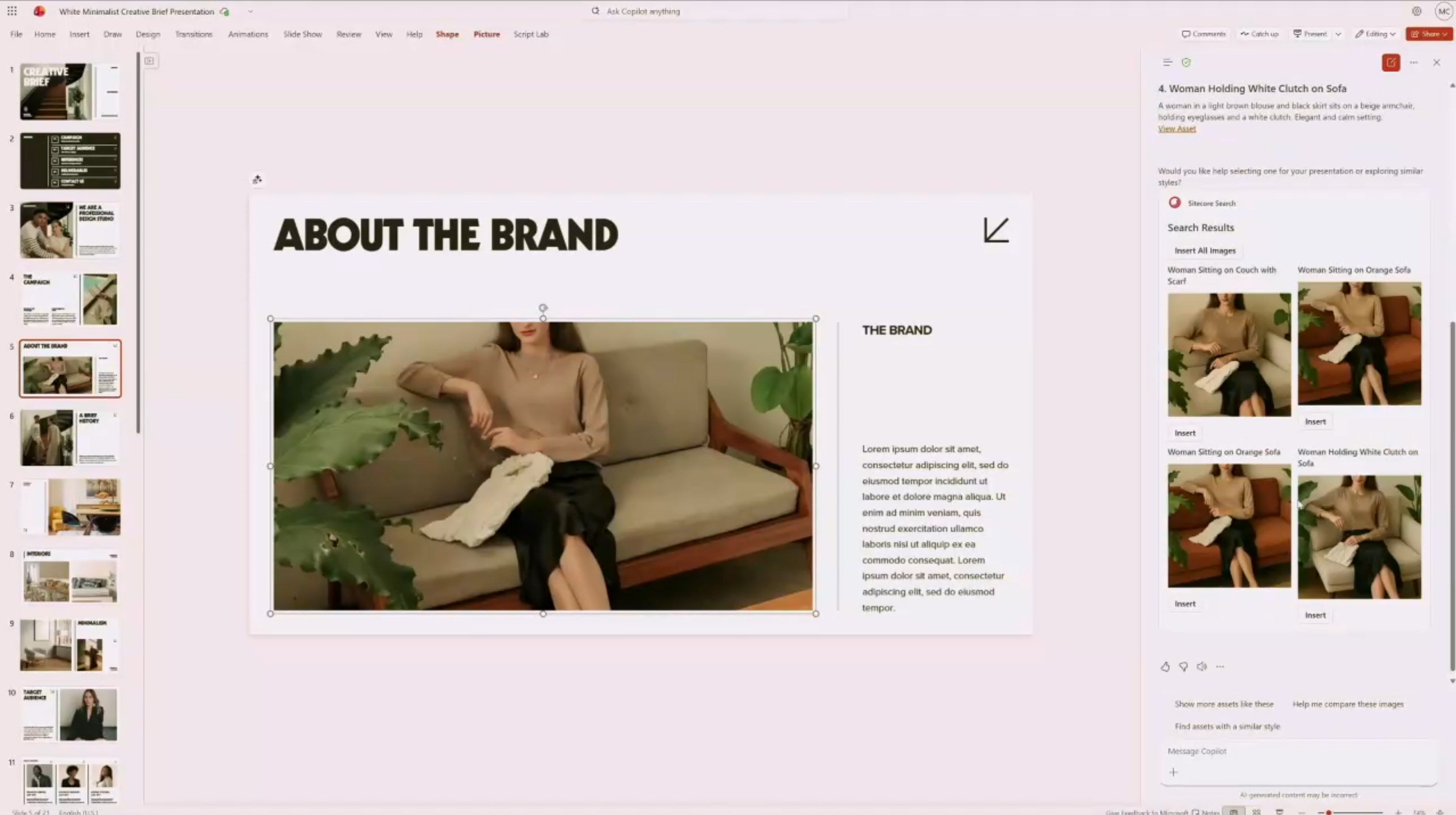
But the magic really starts once these agents actually join your day-to-day tools. One of the coolest examples, and yet another unexpected integration, was how you can integrate them directly into Microsoft Copilot, so your brand assets and Sitecore content follow you into the places and tools you actually work in. Such as opening PowerPoint and chatting with Copilot to find the right approved image, variation or layout ready from your asset library instead of digging through folders and looking through multiple systems.
And then there’s Spaces, a collaborative environment where teams can ideate, discuss, iterate, and visually map out ideas together. With the new Canvas workspace, a freeform, whiteboard-style environment, you can brainstorm, shape concepts and co-create experiences in a way that feels so much more collaborative than passing around documents or waiting on approval chains. It’s going to really SitecoreAI as the central hub for all marketing and campaign activities.
Future of the platform
There were so many great sessions this year, and there really was something for everyone. As always, it’s impossible to attend them all, but these two were my favourite sessions. They were more technically inclined, but really showed just how much the SaaS platform has been able to evolve, and how the on-prem platform will be evolving in the near future.
Deep Dive: Content Service
This was my favourite session of Symposium, and very unexpected for me. Liz Nelson from Sitecore presented alongside Andrew Liu from Microsoft, and they set about to explain the move for XM Cloud/SitecoreAI to CosmosDB on Azure.
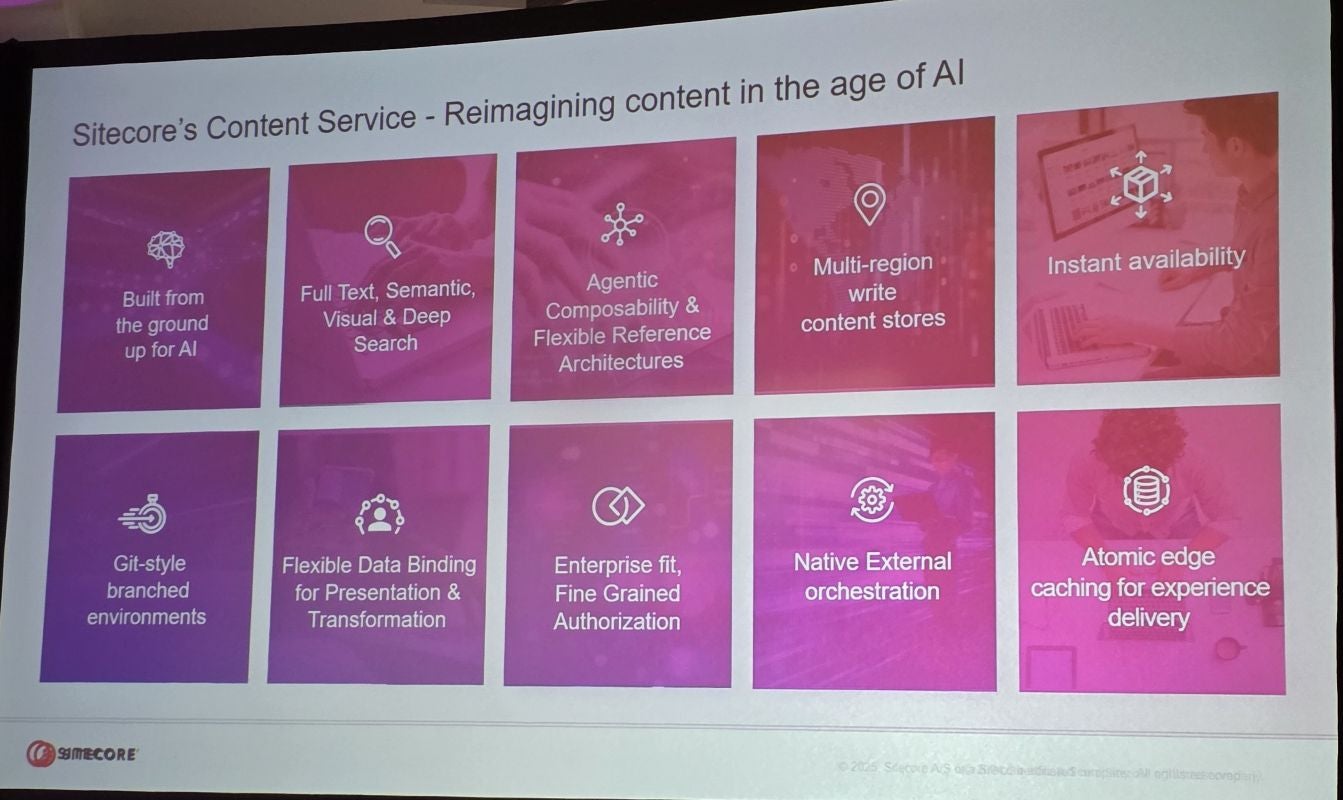
They explained the new Content Service will be powering all content management through SitecoreAI and will underpin the current offerings as they replace old systems and infrastructure. And this is the beauty and power of SaaS – this all happens behind the scenes without any disruption to you. By moving to CosmosDB, a fully managed, globally distributed and serverless NoSQL database, they can truly scale and provide secure multi-tenant applications without the limitation of SQL Server whilst providing support for the modern era of AI.
The Content Service underpins the new feature of Campaign Releases I mentioned earlier, and allow for the instant availability of content. It brings with it many other great benefits such as Git-style branched environments, which are great for content experimentation, campaign building or development environments across team members.
This session underlined just how much work Sitecore has been carrying out in the background to really bring innovation to its customers, and just how much work moving to a SaaS platform has allowed them to carry out at breakneck speeds.
Deep Dive: Platform DXP
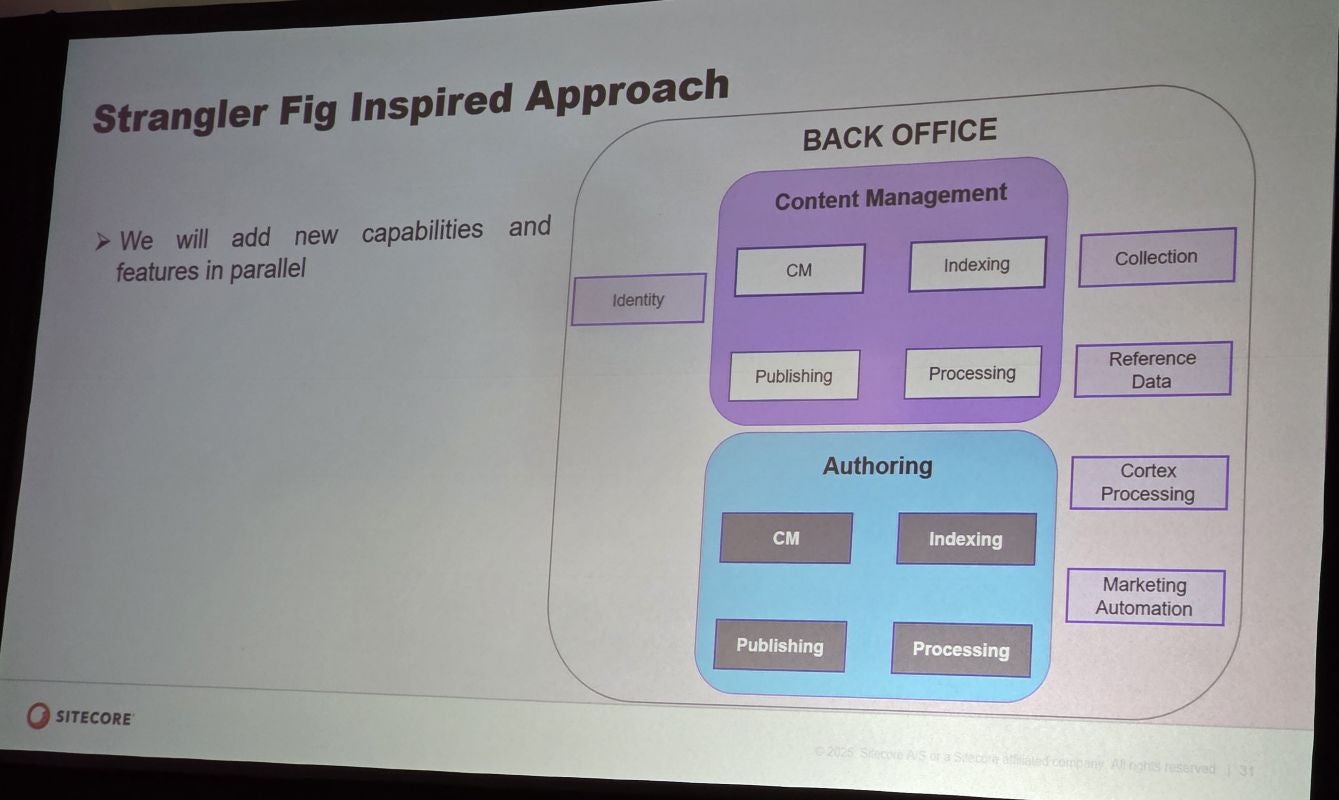
And not to be left behind, it’s great to see more updates on the future of Platform DXP and finally it’s direction towards modernising to .Net Core framework. We joined Vignesh Vishwanath, who manages all things XP, and Maxin Sidorenko who is an Architect for XP as they broke down the vision for Sitecore to follow a “strangler pattern”, a software modernisation technique to follow a gradual and controlled approach to replace legacy systems but building a new system around it.
This session provided the insights into how they will tackle this, where they see future enhancements going and what it will mean for customers in the future. They also discussed adding commonly used extensions directly into the platform, so it requires less customisation (and making any future upgrades simpler). One thing they made clear – they will keep migration efforts very low, and customers will be able to take an MVC or a headless approach. We had first discussed the move to .Net Core last year at Sitecore MVP Summit, so happy to see the public commitment to the approach.
Both of these were fascinating talks, I will write up about them in future posts because there was a lot of very exciting information and detail that was shared.
Sitecore Symposium 2026
And finally, Symposium will be back for 2026, and they announced that it will be back to Dolphin Resort in Orlando, Florida from November 2026.
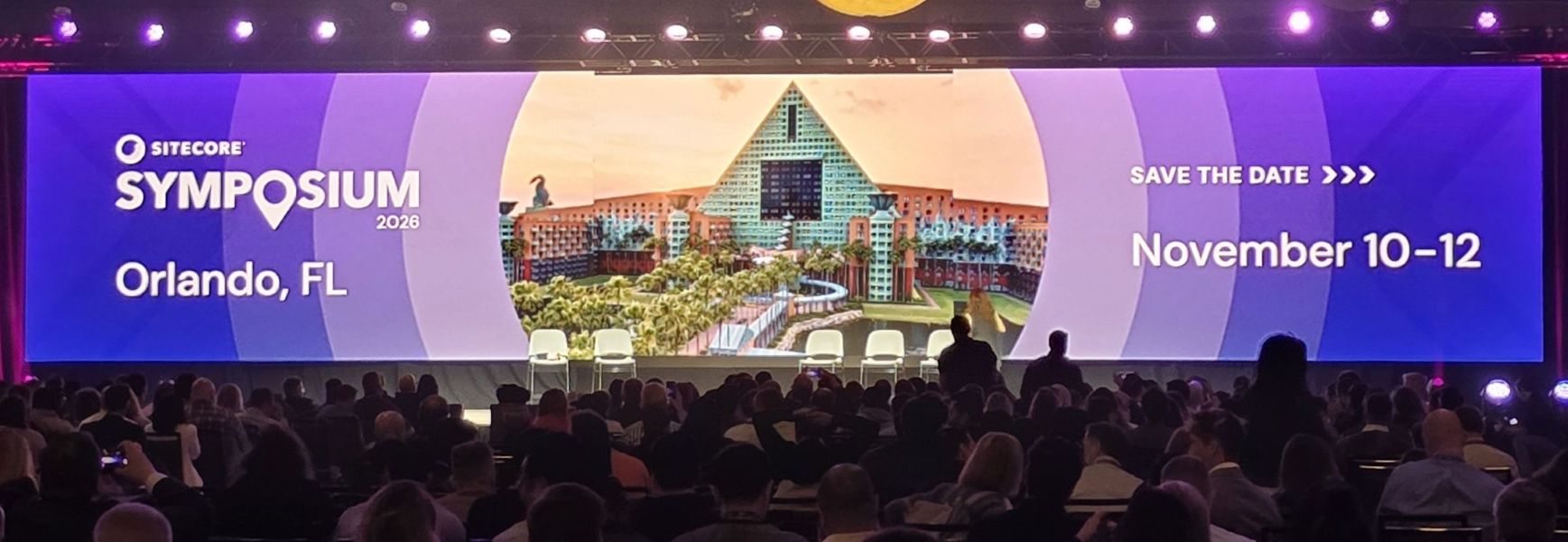
Much like last time it was in Swan & Dolphin, it seems like Orlando comes in twos! I’ll welcome the trip to warmer climates as we heads towards winter in Canada, and as always looking forward to the event.
Watch the videos
We also recorded our thoughts from the event and with other community members. You can catch the recordings here:
- Sitecore Symposium 2025 Day 1 Recap: AI, Agentic Studio & Unified Platform Announced
- Sitecore Symposium 2025 Day 2: AI Pathways, Content Services Rewrite & Release Management Previews
- Sitecore Symposium 2025: Community Insights and Key Takeaways
Looking ahead
There have been a lot of changes happening in the Sitecore space in the past few years, and even months. Both technologically and the changes in leadership. This was a great event with much welcome releases that was the culmination of together many years disruption and innovation. We’re happy to see the platform evolve into a full integrated masterpiece, and it’s exciting that it is now just at the beginning of the transformation, and everyone can see so many more possibilities ahead.
Sitecore Symposium has always been one of my favourite events of the whole year. It’s brings us together with friends, colleagues, customers, the MVPs and gives us an opportunity to talk with and provide feedback directly to everyone at Sitecore. And who doesn't love a Sitecore party - and the private party at Universal Studios did not disappoint again either!

For anyone on XP, anyone planning a migration, anyone already on XM Cloud, or anyone exploring AI-powered content operations: SitecoreAI is going to be the conversation of 2025 and 2026.
If you want to talk about what that might look like for your team, or if you’re curious about the migration accelerator, Agentic Studio, or CosmosDB workflows, we’re here and happy to share what we’ve learned.
Let’s talk about what SitecoreAI means for your digital experience future.

Kamruz Jaman
Kamruz is a 14-time Sitecore MVP who has worked with the Sitecore platform for more than a decade and has over 20 years of development and architecture experience using the Microsoft technology stack. Kamruz is heavily involved in the Sitecore Community and has spoken at various User Groups and Conferences. As one of the managing partners of Konabos Inc, Kamruz will work closely with clients to ensure projects are successfully delivered to a high standard.
Share on social media